Landscape vs. Architectural Lighting: What's the Difference?
When homeowners start exploring outdoor lighting, two terms come up again and again: landscape lighting and architectural lighting. They overlap, but understanding the difference helps you describe what you want — and helps us design a system that delivers it.
What is architectural lighting?
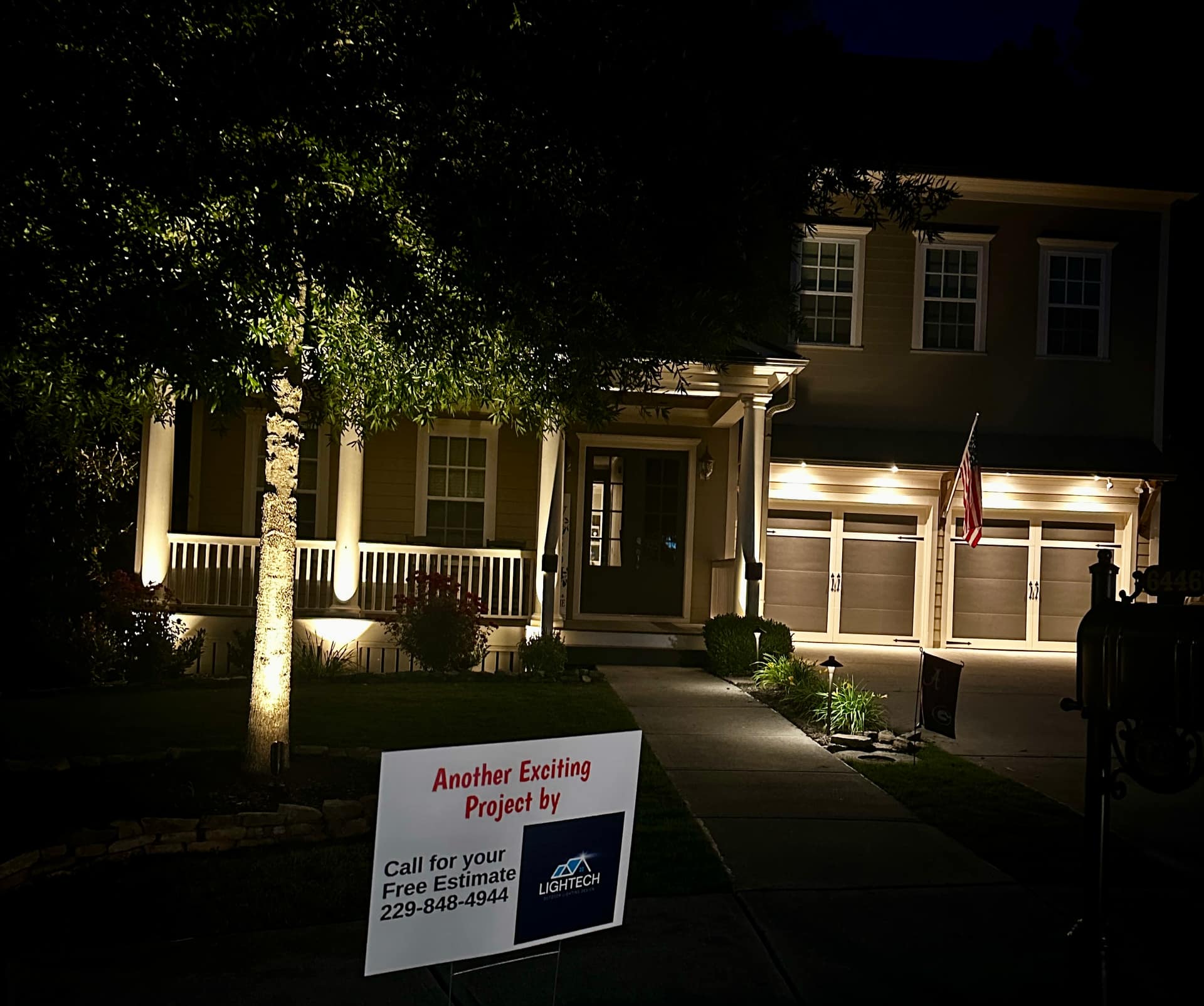
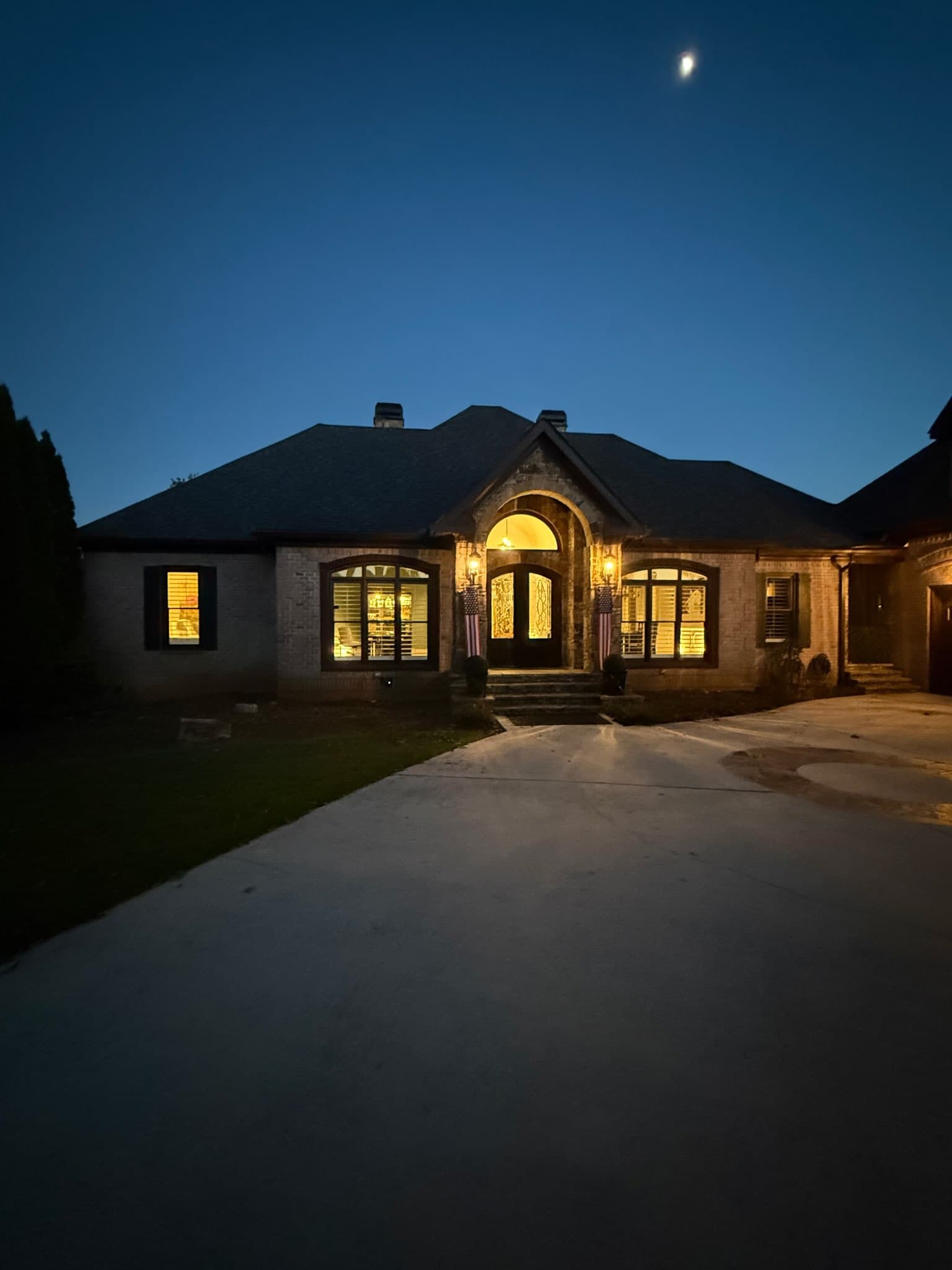
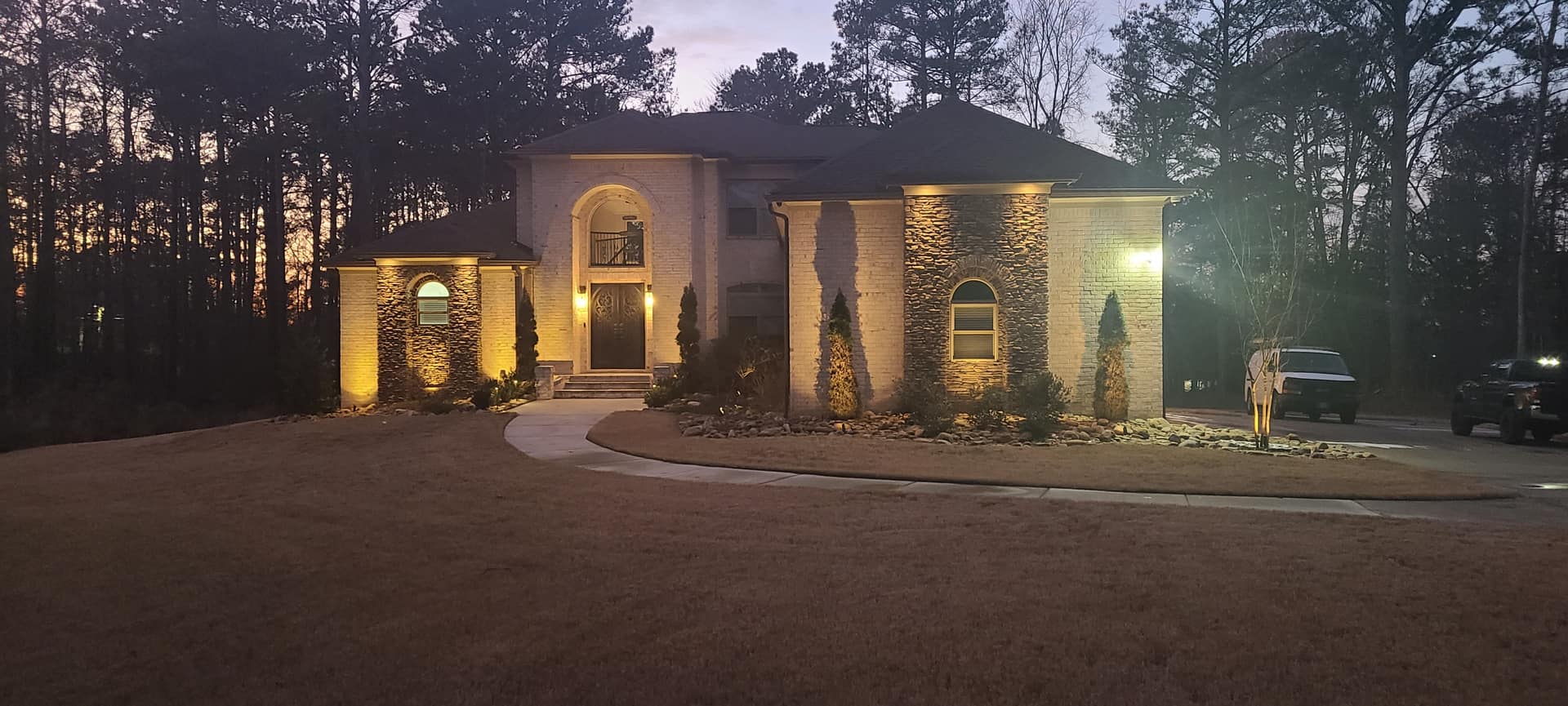
Architectural lighting focuses on the structure itself — your home's facade, columns, gables, stone, and rooflines. Using carefully aimed uplights and wall grazing, it emphasizes texture and form, giving the building a confident nighttime silhouette. This is what makes a house look dramatic and intentional from the curb.
What is landscape lighting?
Landscape lighting illuminates everything around the home: trees, garden beds, pathways, water features, and hardscapes. It adds depth, guides movement through the property, and creates the warm, layered glow that makes a yard feel inviting rather than flat.
Which one does your home need?
In most cases, the answer is both. Architectural lighting gives your home presence, while landscape lighting provides context and warmth around it. Used together, they create depth — the eye moves from a glowing tree, along a lit path, up to an accented facade.
During your free consultation, we'll assess your property and recommend the right balance so nothing feels over- or under-lit.